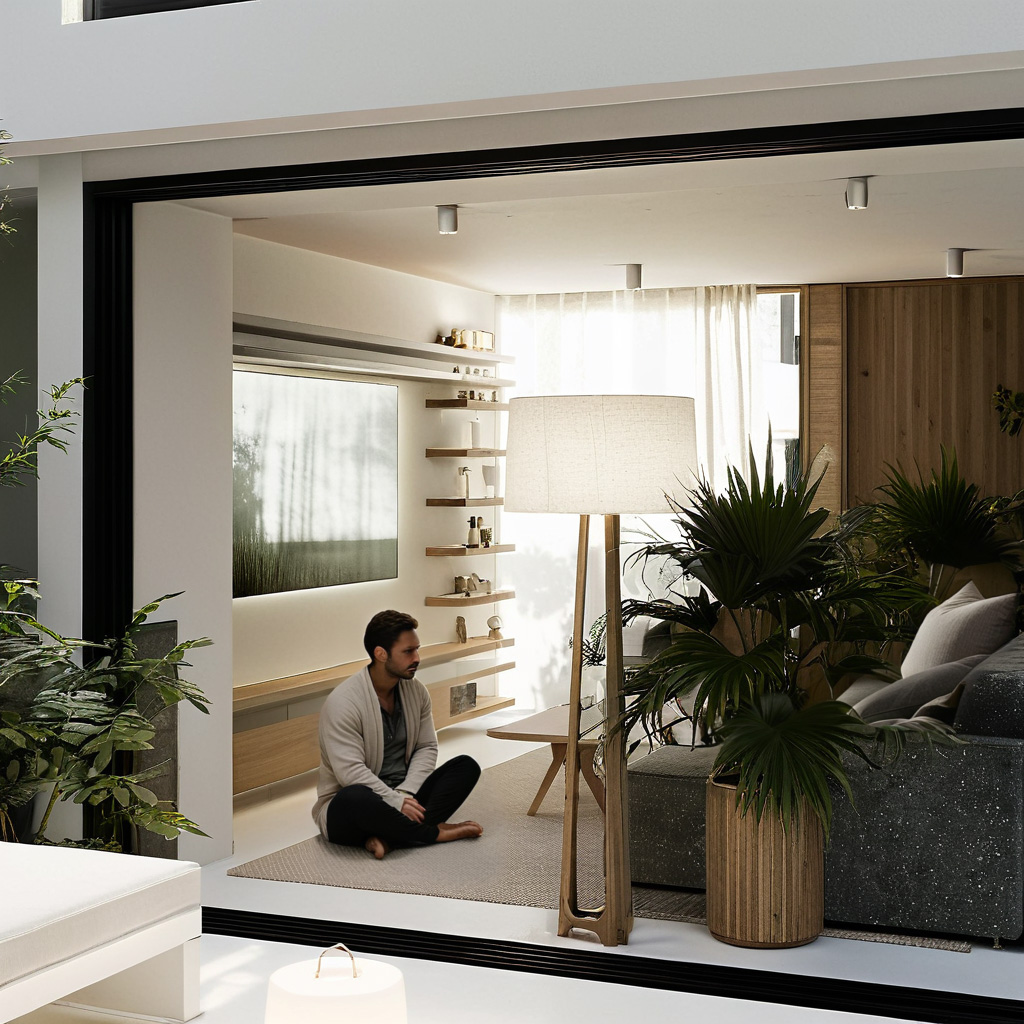

House of Terraces
A renovated home designed around light, vegetation, and the rhythms of everyday life.
An Existing House as a Starting Point
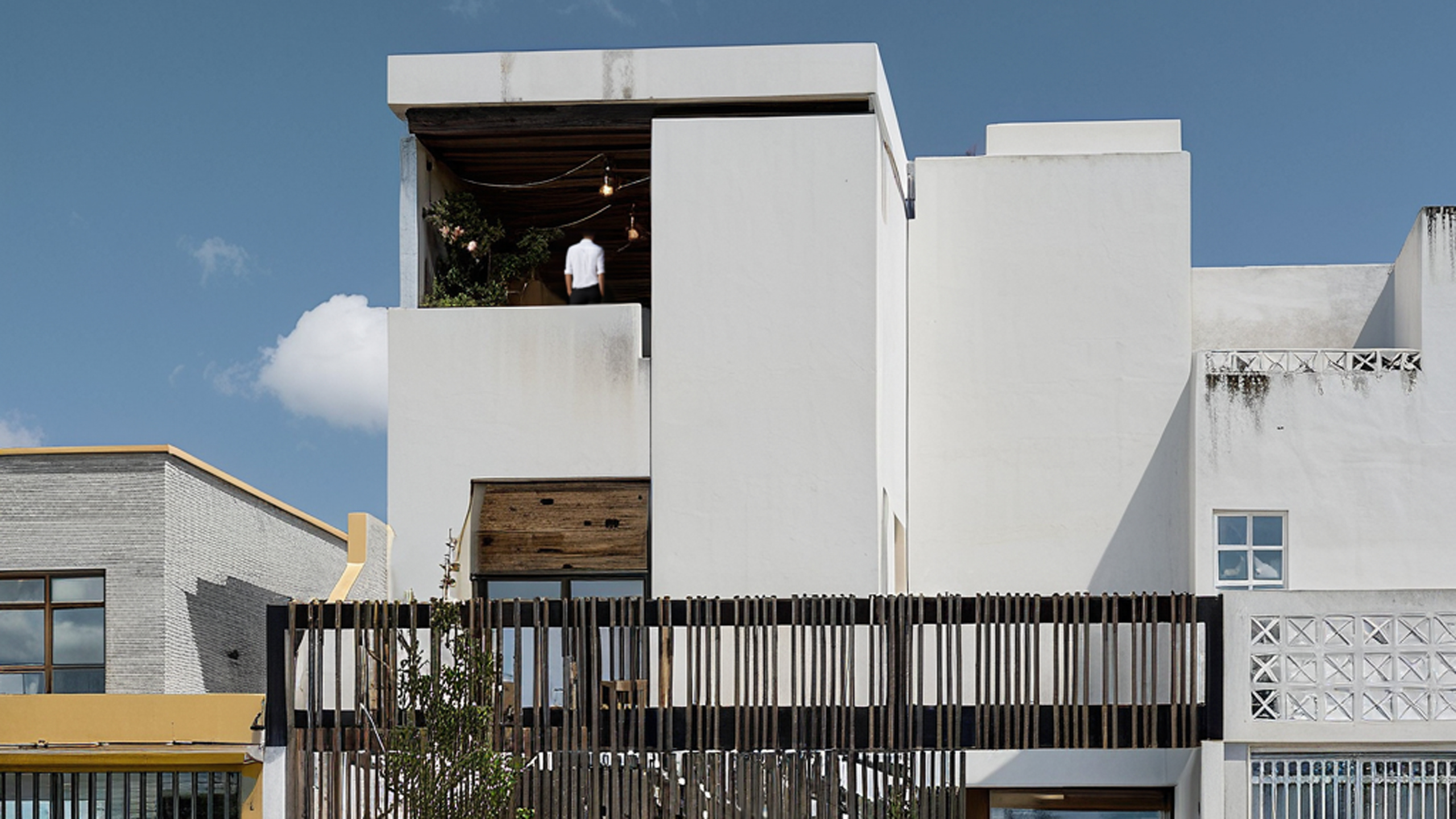
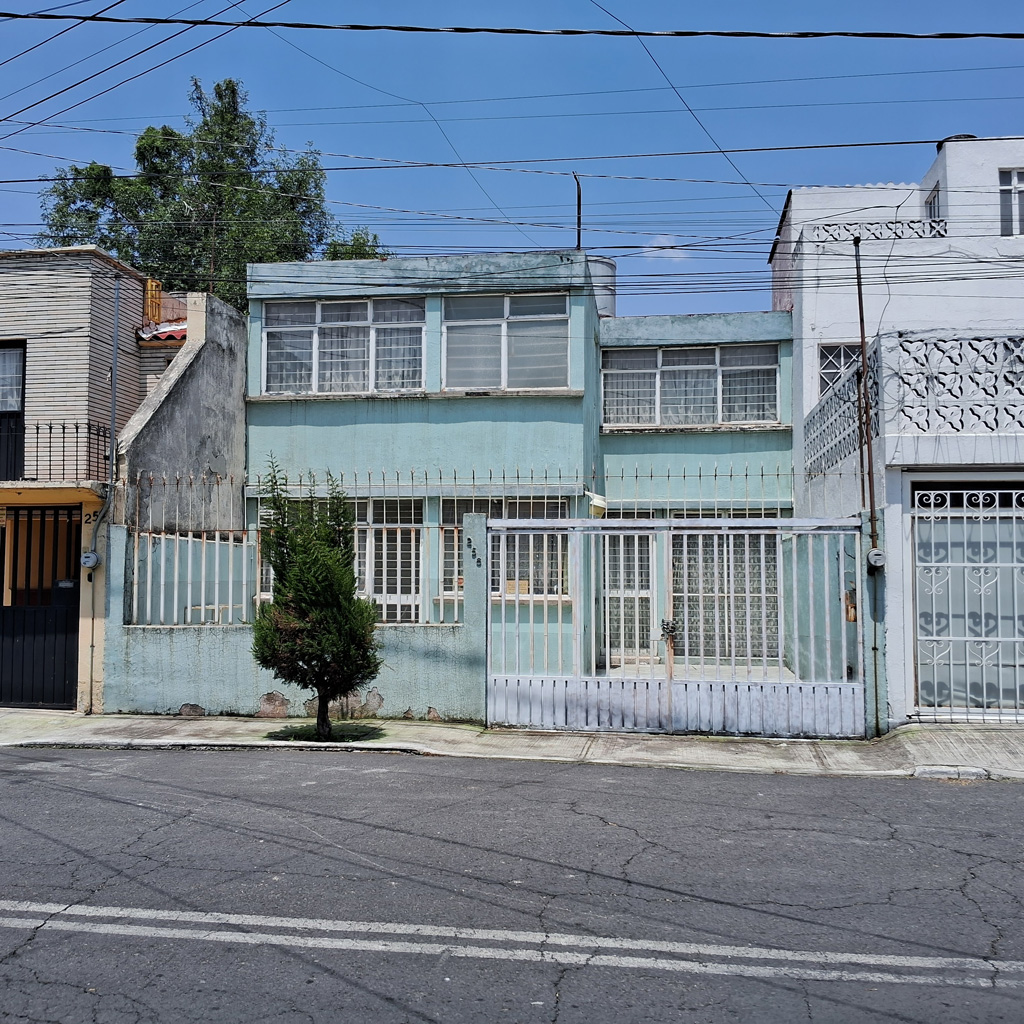
House of Terraces is the renovation and expansion of a home originally built in the 1960s in Mexico City. Located in a predominantly single-family residential neighborhood, the original house reflected many of the defining principles of modernist architecture of its time: clear geometry, rational organization, horizontal windows, and an emphasis on efficiency that reduced room sizes and ceiling heights to what was considered minimally sufficient.
As is often the case with houses from that period, the building retained many valuable qualities. Its structure was in good condition, it enjoyed a direct relationship with the outdoors through a front yard and a generous rear garden, and it possessed a constructive logic that suggested new possibilities. At the same time, it reflected the limitations of a way of living that has evolved over the decades. Social spaces felt undersized for contemporary life, the kitchen remained separated from the rest of the house, and much of the property's potential remained untapped.
The intervention began with a simple question: how can an existing house be transformed to support a contemporary way of living without losing what makes it valuable?
The answer was not to erase its history or impose an entirely different architecture upon it. Instead, the project sought to build upon what already existed, understanding both its strengths and limitations and using them as the foundation for a new living experience.
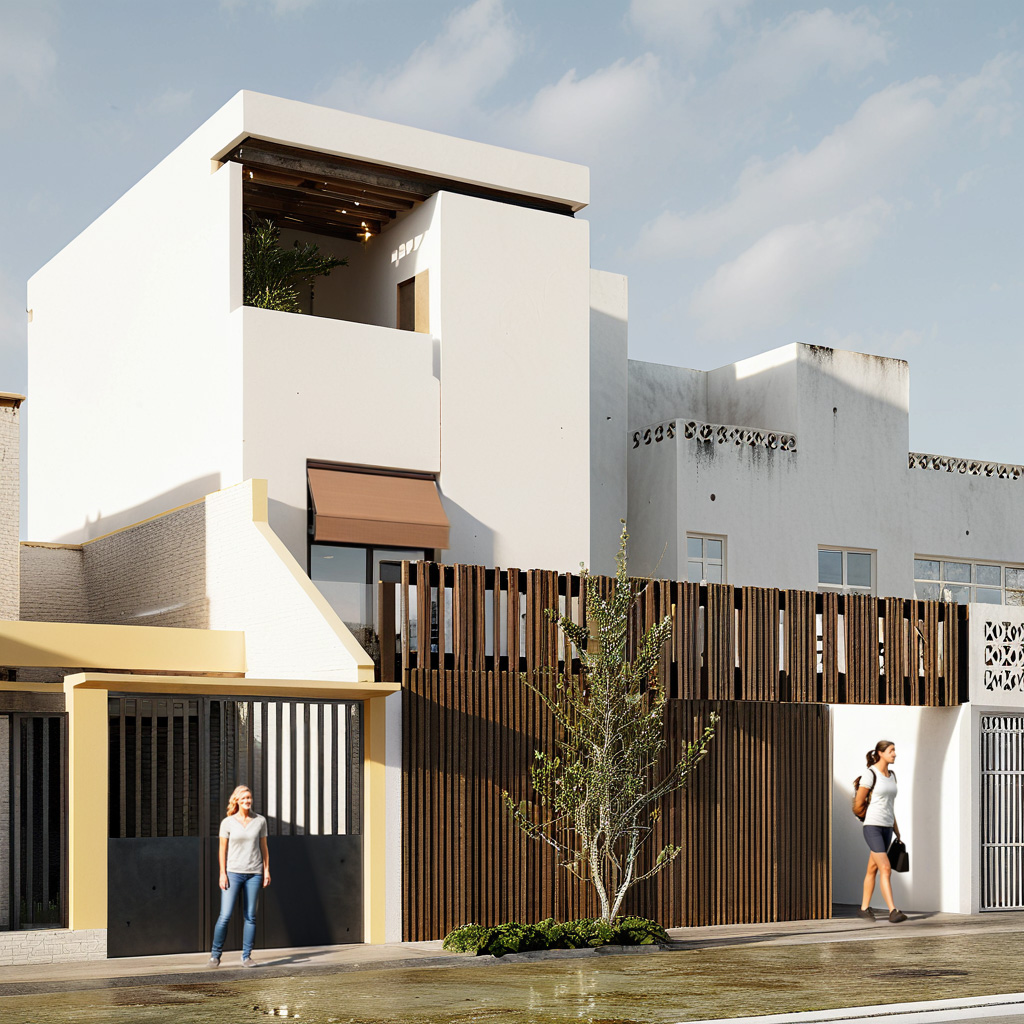
More than a replacement, the project is an evolution. A transformation that preserves resources, takes advantage of existing structures, and demonstrates that the best architecture is not always about starting from scratch, but about discovering the hidden potential within what is already there.
Renovation as a Responsible Decision
At a time when construction is often associated with replacement, renovation represents a different approach. It recognizes the value of what already exists and understands that architecture can also consist of adapting, improving, and transforming.
From an environmental perspective, preserving an existing structure avoids a significant amount of waste and reduces the consumption of materials that would be required for demolition and new construction. Every wall, slab, and structural element that remains in place represents resources that continue to serve a purpose.
From an economic perspective, renovation allows investment to be directed toward the aspects that genuinely improve quality of life. Rather than rebuilding what already works, resources can be focused on expanding spaces, improving comfort, incorporating durable materials, and creating new opportunities for daily living.
House of Terraces is rooted in this perspective. The project understands sustainability not as a collection of technological devices, but as an intelligent way of making the most of what already exists, extending its lifespan and allowing it to continue contributing to the city.
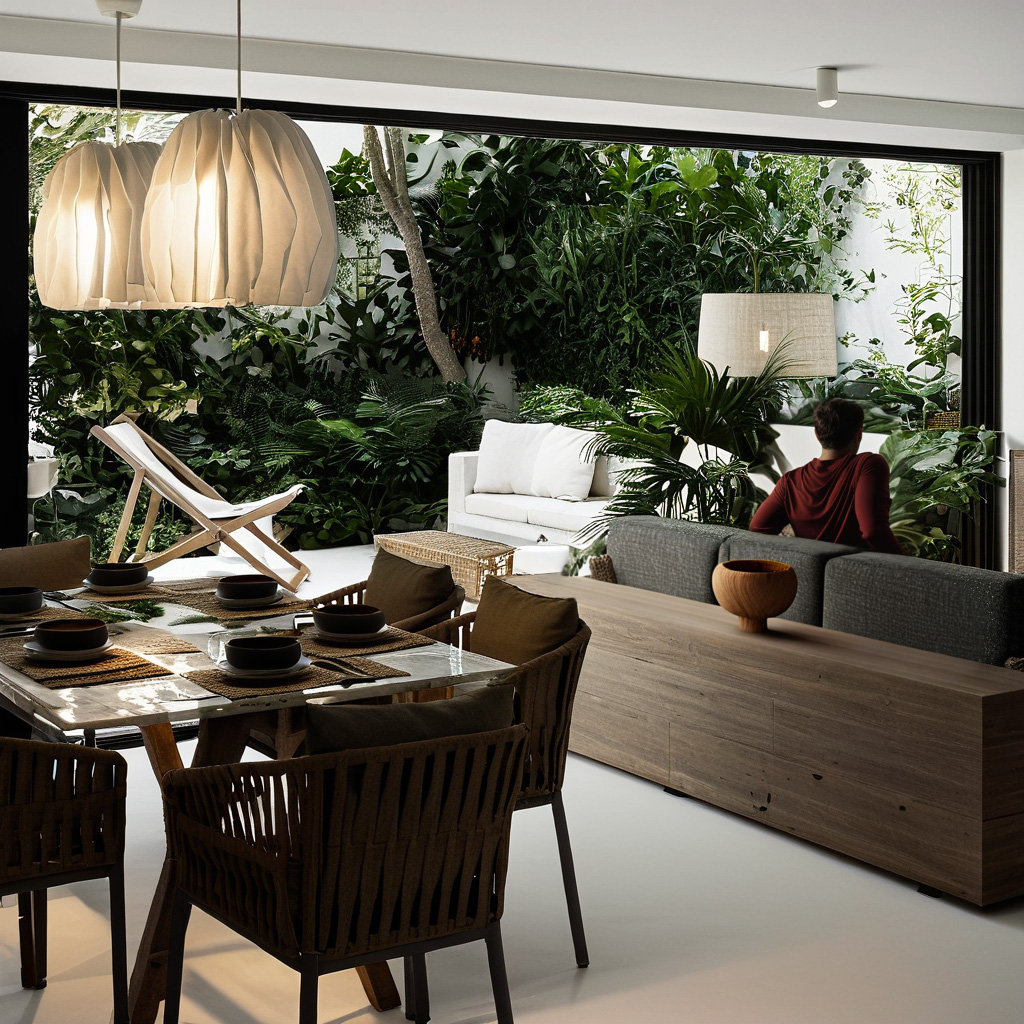
A New Way of Living in Shared Spaces
One of the project's primary objectives was to enlarge the areas where everyday family life takes place.
The original house followed a layout in which each room was clearly separated and dimensions reflected standards very different from those of today. As lifestyles evolve, so do the needs of those who inhabit a home.
To respond to these changing requirements, the house was extended one meter toward the rear garden. While the addition may appear modest in numerical terms, its spatial impact is significant.
The living and dining areas gained new proportions that allow greater flexibility in everyday use. Circulation became more comfortable, views expanded, and the connection with the garden intensified.
The primary and secondary bedrooms also benefited from the extension. Both gained additional space and a stronger relationship with the outdoors, creating rooms that feel more comfortable and adaptable to different ways of living.
The project demonstrates how a relatively contained intervention can profoundly transform the daily experience of a home.
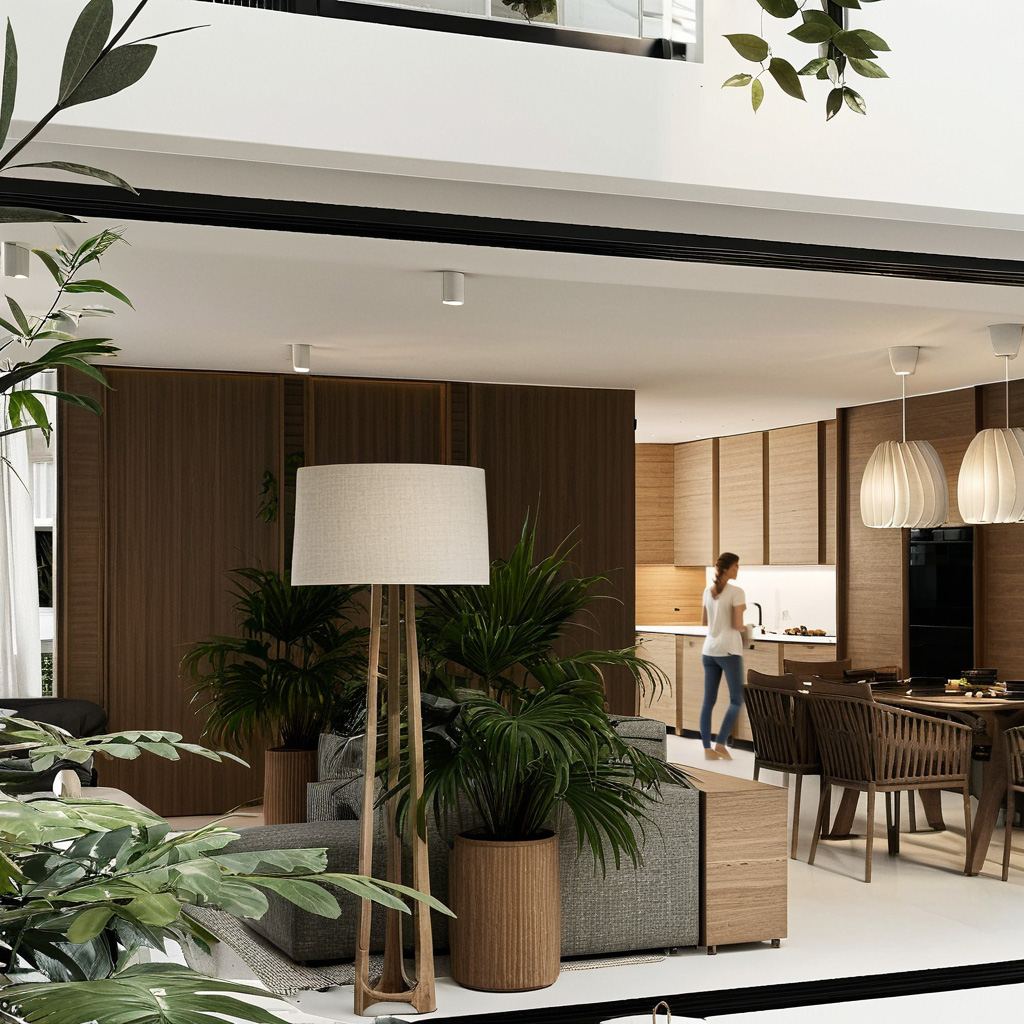
The Kitchen as a Social Hub
For decades, many homes were designed around the idea that cooking should remain separate from the rest of domestic life. Kitchens became enclosed spaces hidden behind walls and doors.
Today, we understand the home differently.
Cooking is a social activity. It is a moment for conversation, interaction, and participation in everyday life. For this reason, one of the most important changes introduced by the project was the integration of the kitchen with the main living area.
Removing the existing physical barriers allows the kitchen, dining room, and living room to become part of a single spatial experience. Light moves more freely through the house, views extend across the floor plan, and relationships between occupants become more fluid.
This integration does more than alter the layout of the house. It transforms the way it is lived.
Activities no longer take place in isolated compartments but become part of a shared experience, creating a home that is more open, flexible, and aligned with contemporary lifestyles.
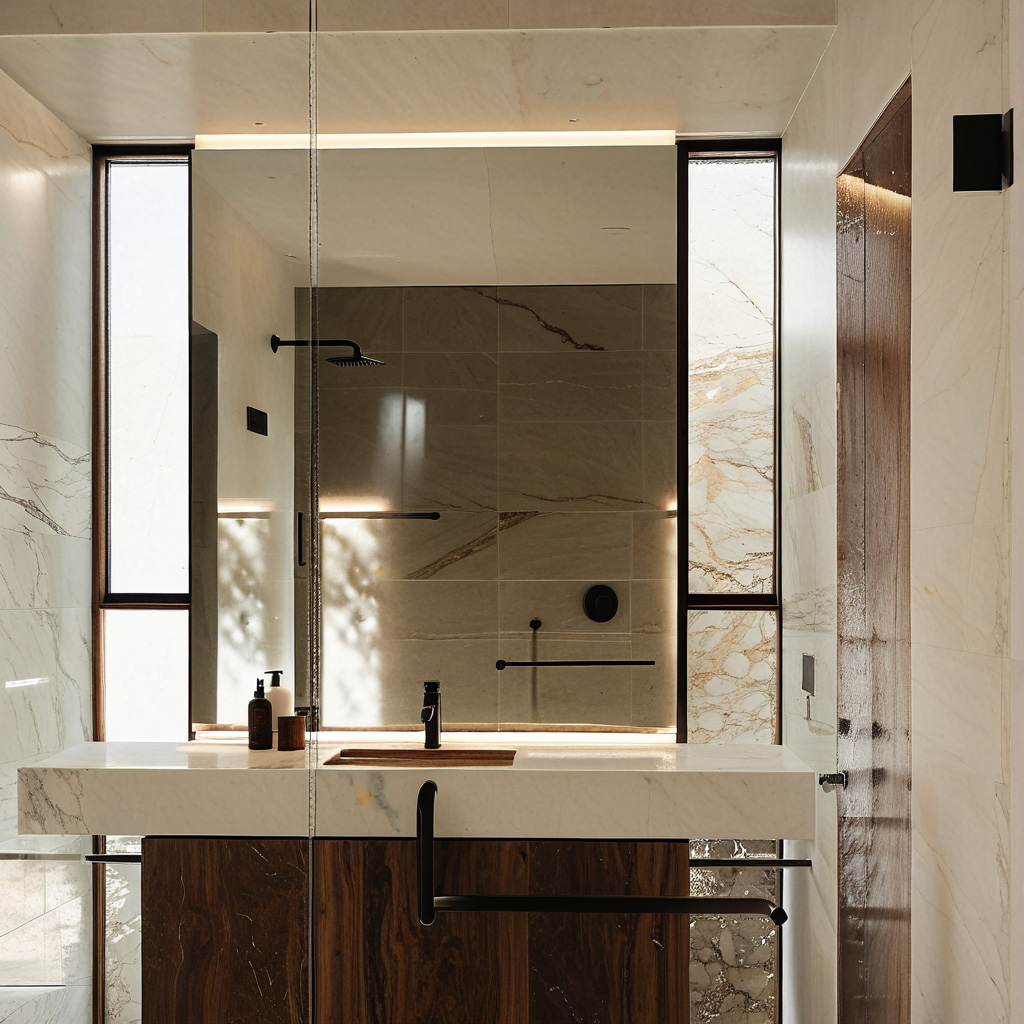
A Shared Bathroom Designed for Everyday Life
The expansion of the house also provided an opportunity to rethink the organization of its private spaces.
Between the two main bedrooms was a bathroom accessed from a small shared landing. This arrangement effectively turned it into a general-use bathroom for the entire floor.
The new proposal takes advantage of the house extension to completely transform this condition.
The bathroom was enlarged and reconfigured as a space shared exclusively by the two bedrooms. This decision improves privacy, optimizes daily circulation, and enhances overall comfort.
Beyond functionality, the project understands these spaces as an important part of everyday living. The additional area allows for improved natural light, ventilation, and storage, elevating the quality of a space used every day.
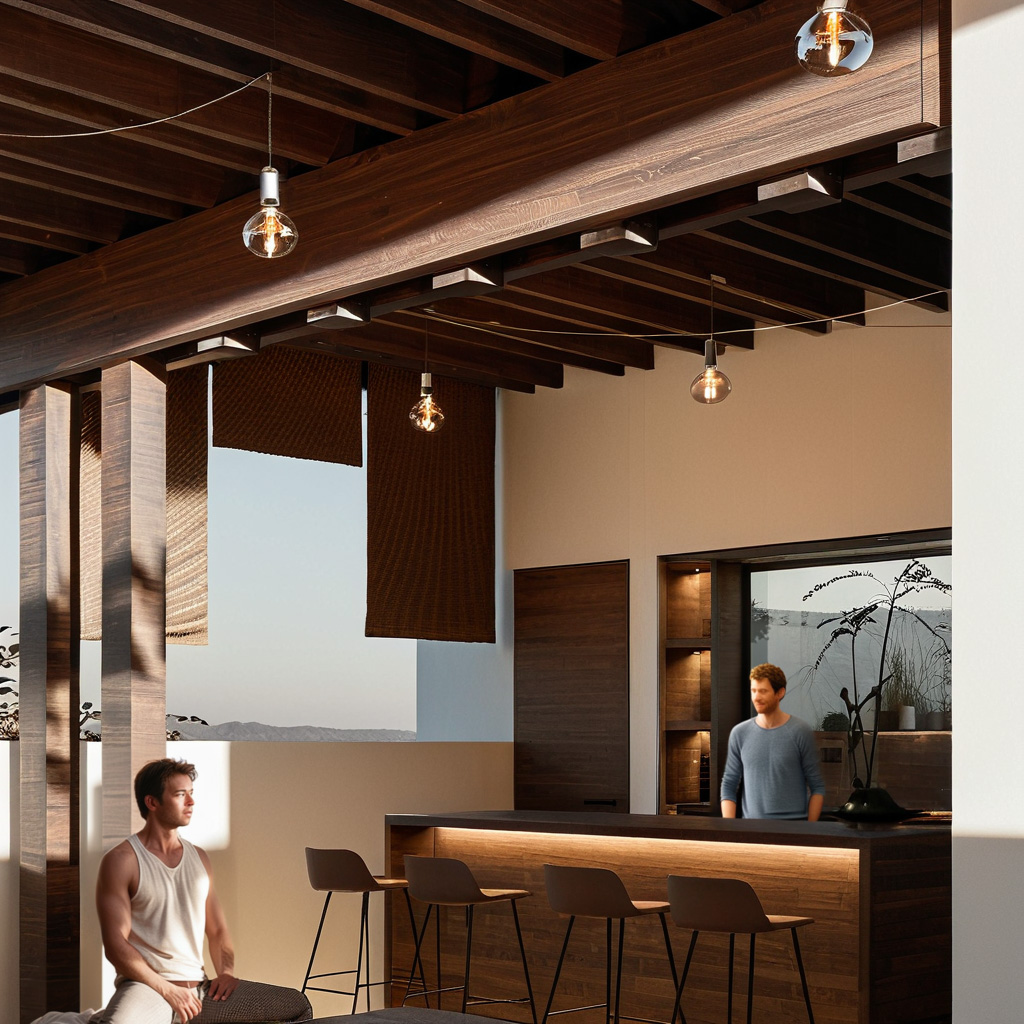
Two Terraces for a Life Closer to the Outdoors
The project's name originates from one of its defining characteristics: the creation of two outdoor spaces that expand the possibilities of living within the home.
The first terrace emerges at ground level as a result of integrating the living and dining areas with the rear garden.
A large sliding glass opening allows the boundary between inside and outside to virtually disappear when fully open. The garden is no longer something viewed from within the house; it becomes a natural extension of the social spaces.
Family gatherings, informal meals, reading, or simply enjoying a quiet afternoon can take place seamlessly between both environments.
The second terrace occupies the new third level and represents one of the project's most significant transformations.
Rather than serving as a secondary outdoor area, it is conceived as an open-air room beneath the sky. A protected, shaded, and naturally ventilated space that can be enjoyed throughout much of the year.
While the first terrace connects daily life with the garden, the second offers a different experience: a broader relationship with the horizon, vegetation, and the changing conditions of the city.
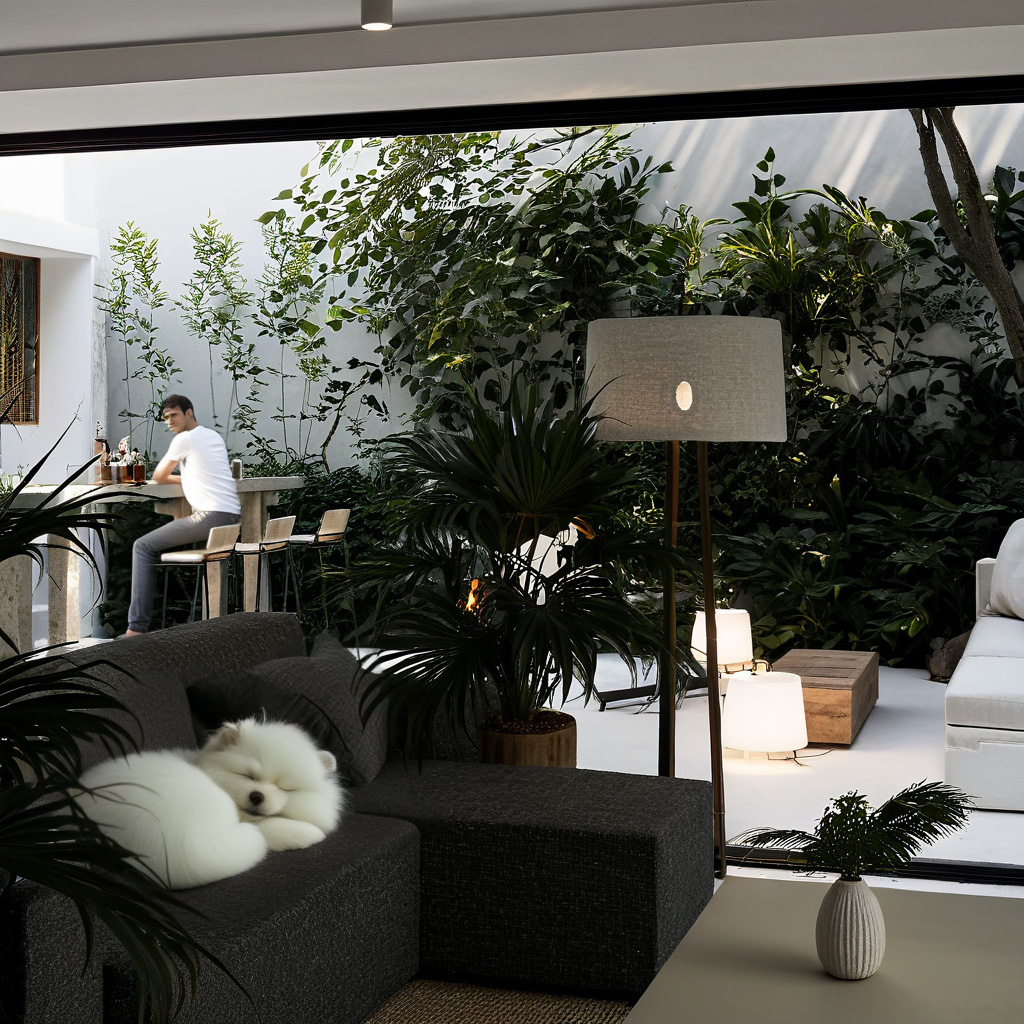
Vegetation as an Architectural Material
Vegetation was never considered a decorative element to be added at the end of the design process. From the beginning, it formed part of the project's spatial strategy.
The original rear yard was a hard, largely featureless space with limited capacity to enrich everyday life. The intervention sought to transform this condition through the introduction of vegetation that surrounds and accompanies the living spaces.
By becoming visually integrated with the living and dining areas, the garden becomes a permanent component of the interior experience. Views change with the seasons, light filters through leaves and branches, and living elements introduce a sensory dimension that cannot be achieved through construction materials alone.
On the upper terrace, vegetation takes on an even more prominent role. A series of planters defines the edges of the space and creates its own atmosphere.
Although the terrace remains open to its surroundings, the presence of plants creates a sense of refuge. The intention is not to isolate the space from the city but to create a gentler transition between architecture and its environment.
Vegetation thus becomes another building material, as important to the project as wood, concrete, or white finishes.
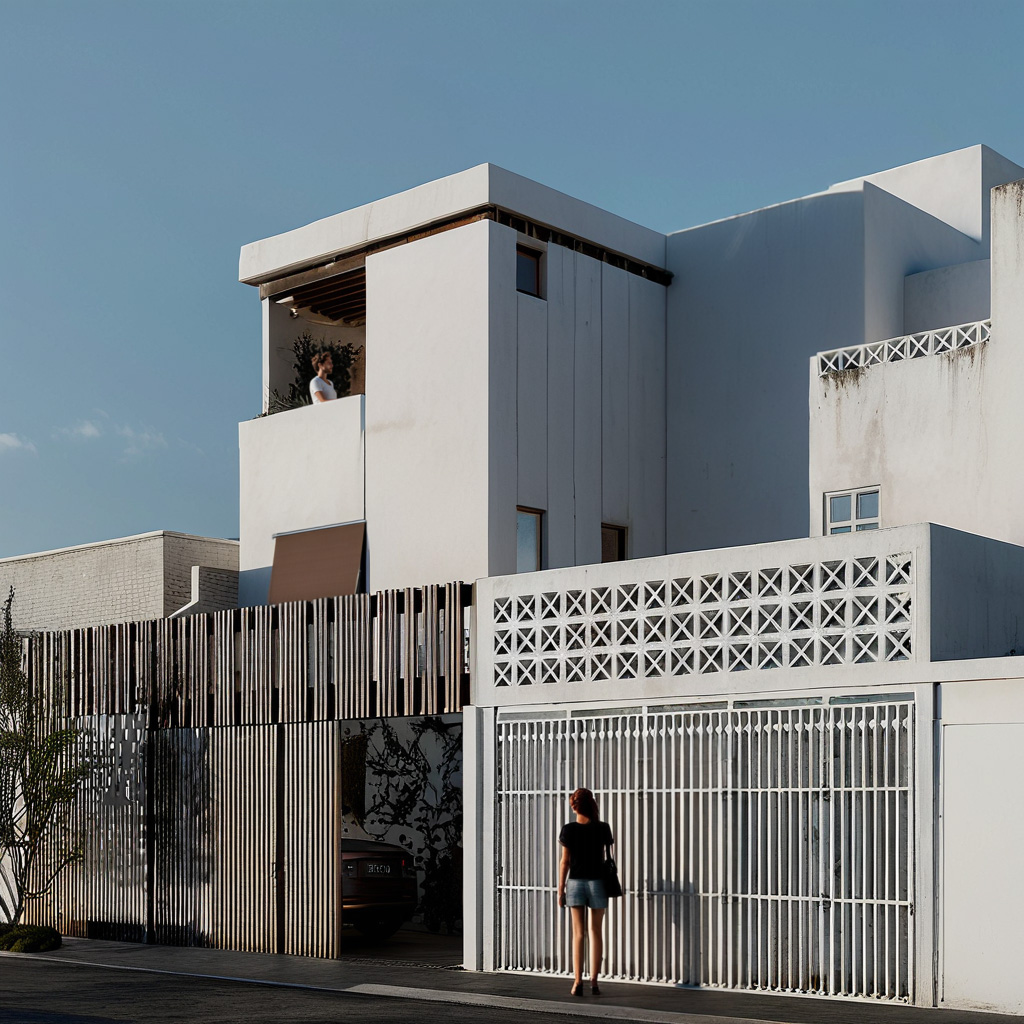
Vertical Windows and a New Relationship with the Landscape
Another fundamental transformation involved replacing many of the original horizontal windows with vertically proportioned openings.
This decision responds to both functional and experiential considerations.
Vertical windows allow occupants to perceive a broader range of the surrounding environment. They frame the ground, nearby vegetation, neighboring buildings, and the sky simultaneously, creating a more complete relationship with the landscape.
They also transform the perception of interior space.
When opened, they create a sense of proximity to the outdoors that resembles the experience of standing on a balcony. Occupants feel more connected to the exterior and more engaged with what lies beyond the walls of the house.
This condition is especially valuable in a dense urban setting, where every opportunity to establish a stronger relationship with the outdoors enriches everyday life.
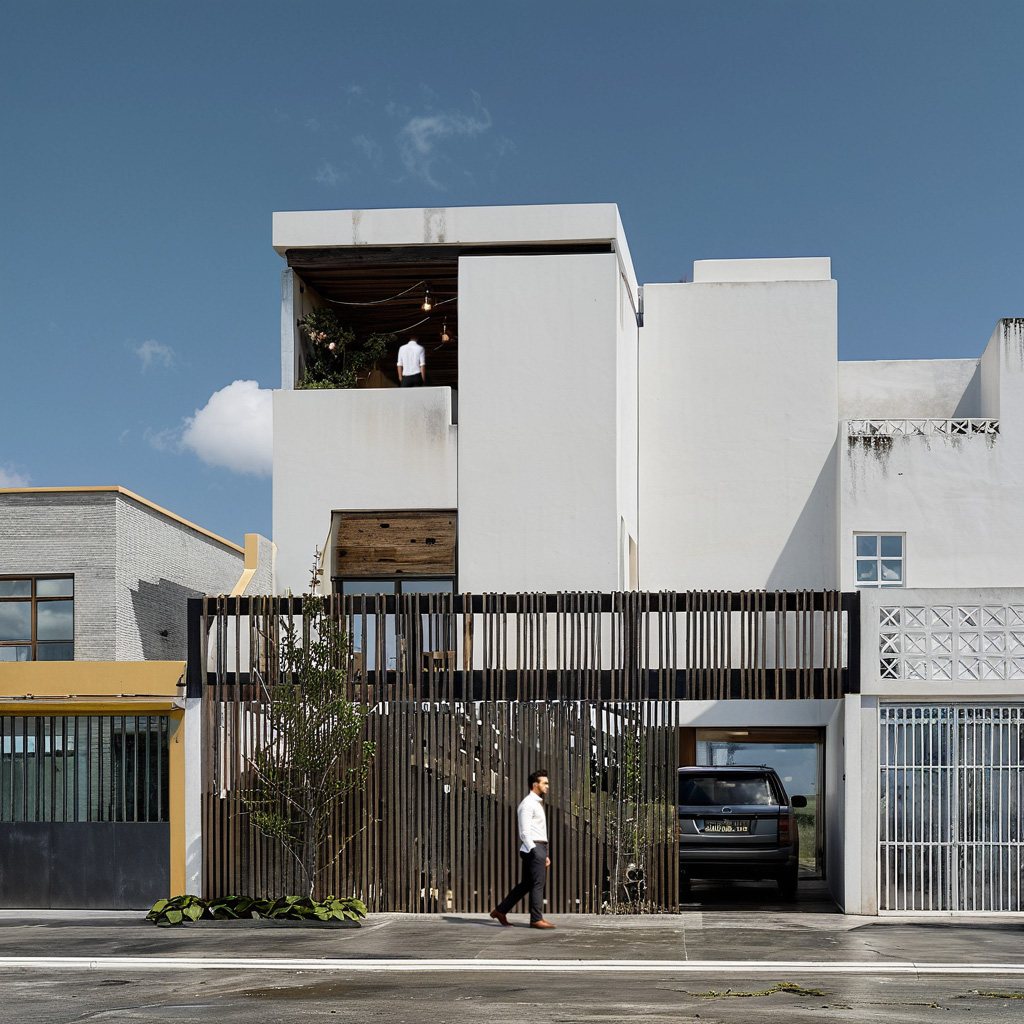
A More Comfortable Home in Response to Climate
Beyond transforming spaces and improving their connection to the outdoors, the project also addressed the site's specific environmental conditions.
The original house presented several factors that encouraged heat gain. Its main façade faces west, interior ceiling heights are relatively low, and the concrete roof receives direct solar radiation for much of the day.
The strategy for improving comfort was developed through a series of complementary interventions.
Some west-facing windows were removed to reduce direct solar exposure. In situations where this was not possible, exterior shading elements were introduced to block the afternoon sun while preserving ventilation and views.
The new upper terrace also plays a crucial role. Its roof functions as a secondary protective layer that shields the existing slab from direct solar radiation.
The ventilated air space created between both surfaces significantly reduces heat transfer into the rooms below. The result is a more comfortable home with reduced dependence on mechanical cooling.
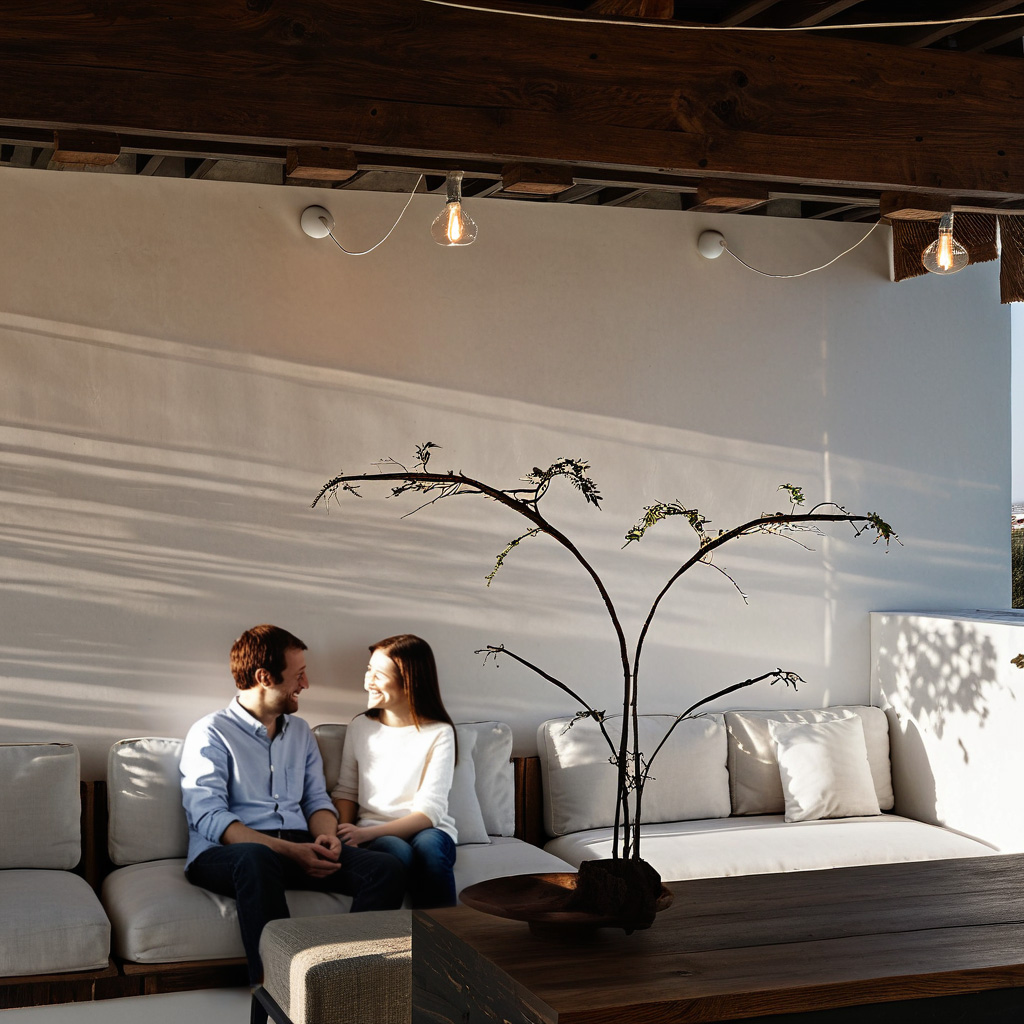
The Spatial Experience of the Upper Terrace
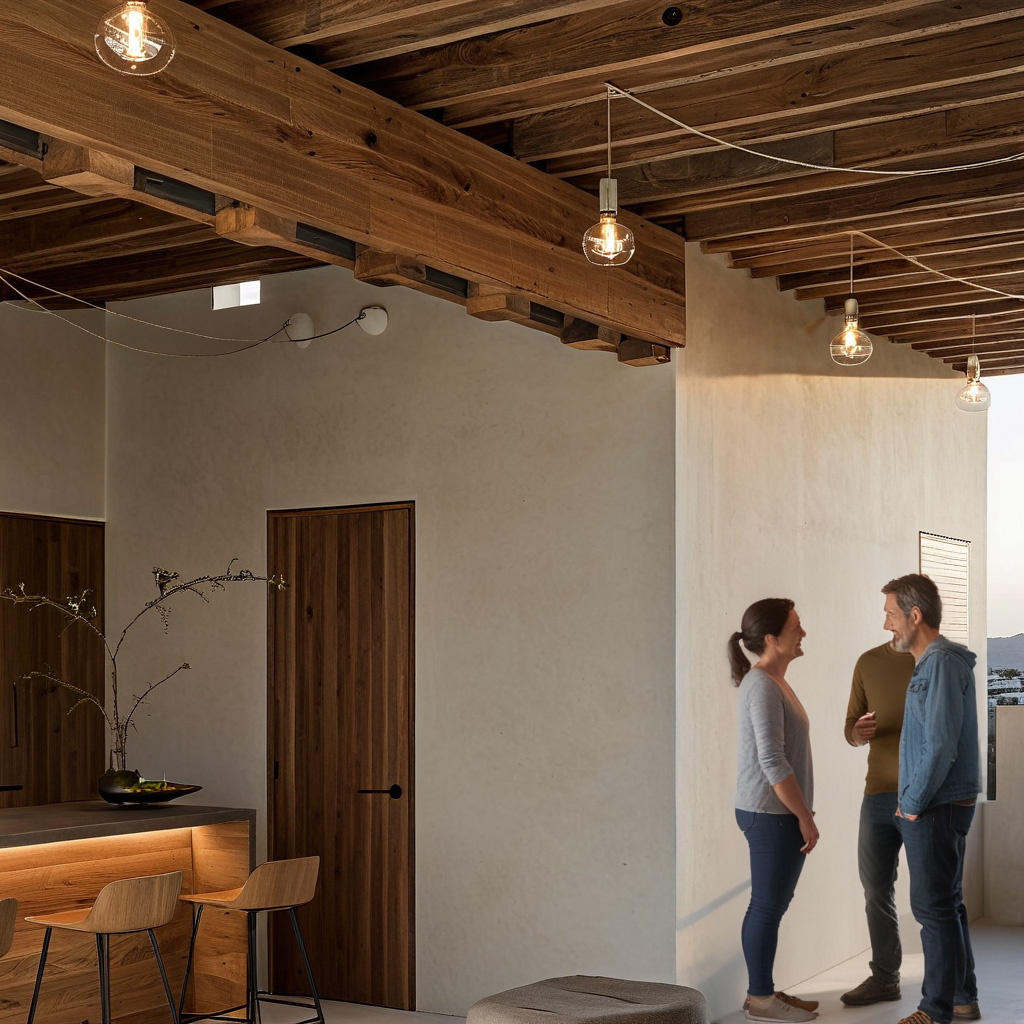
If there is one place where the project's central ideas converge, it is the third-level terrace.
Unlike the original floors, where ceiling heights were limited by the constraints of the existing construction, this space takes full advantage of the height permitted by local regulations.
The spatial experience changes completely.
The roof is supported by a timber structure whose proportions, texture, and warmth create an atmosphere very different from that of a conventional concrete slab. The space feels lighter, warmer, and more inviting.
The primary and secondary beams are organized through a system of paired structural elements that simultaneously address technical and aesthetic requirements. Connections become part of the architectural expression, revealing how the structure is assembled rather than concealing it.
The roof also incorporates insulating materials that reduce thermal transfer and improve comfort.
Together, these elements transform the terrace into a place designed for staying rather than simply passing through. A space where shade, ventilation, vegetation, and structure work together to create an experience unlike anything available in the original house.
Building More Without Demanding More from the Foundations
Any significant transformation of an existing home presents structural challenges.
One of the project's primary goals was to add a new level without imposing excessive loads on the existing structure and foundations.
The strategy began with the selection of lightweight construction systems. The terrace structure was built using timber beams supporting a lightweight floor assembly, significantly reducing the overall weight of the intervention.
The new walls were constructed using cellular concrete blocks, further decreasing permanent loads.
Finally, some of the heavier fill materials within the existing structure were replaced with lighter alternatives, offsetting part of the weight introduced by the new level.
These decisions made it possible to fully utilize the property's development potential without costly foundation reinforcement, demonstrating how design and engineering can work together to achieve efficient solutions.
Transforming Without Losing the Essence
House of Terraces is the result of understanding architecture as a process of transformation rather than replacement.
The intervention expands living spaces, improves comfort, introduces new areas for gathering, strengthens the relationship with nature, and takes advantage of the property's full potential. Yet it does so while maintaining an ongoing dialogue with the house that came before it.
The project demonstrates that renovation can be much more than an aesthetic update. It can become an opportunity to rethink how we live, make better use of existing resources, and create spaces that respond to contemporary needs without abandoning the memory of a place.
More than an expanded house, House of Terraces is a home that discovers new ways of being lived in. An architecture that finds value both in what remains and in what changes, using that balance to create a daily experience that is more open, more comfortable, and more connected to nature.